We canceled you. But you are still here.
2019

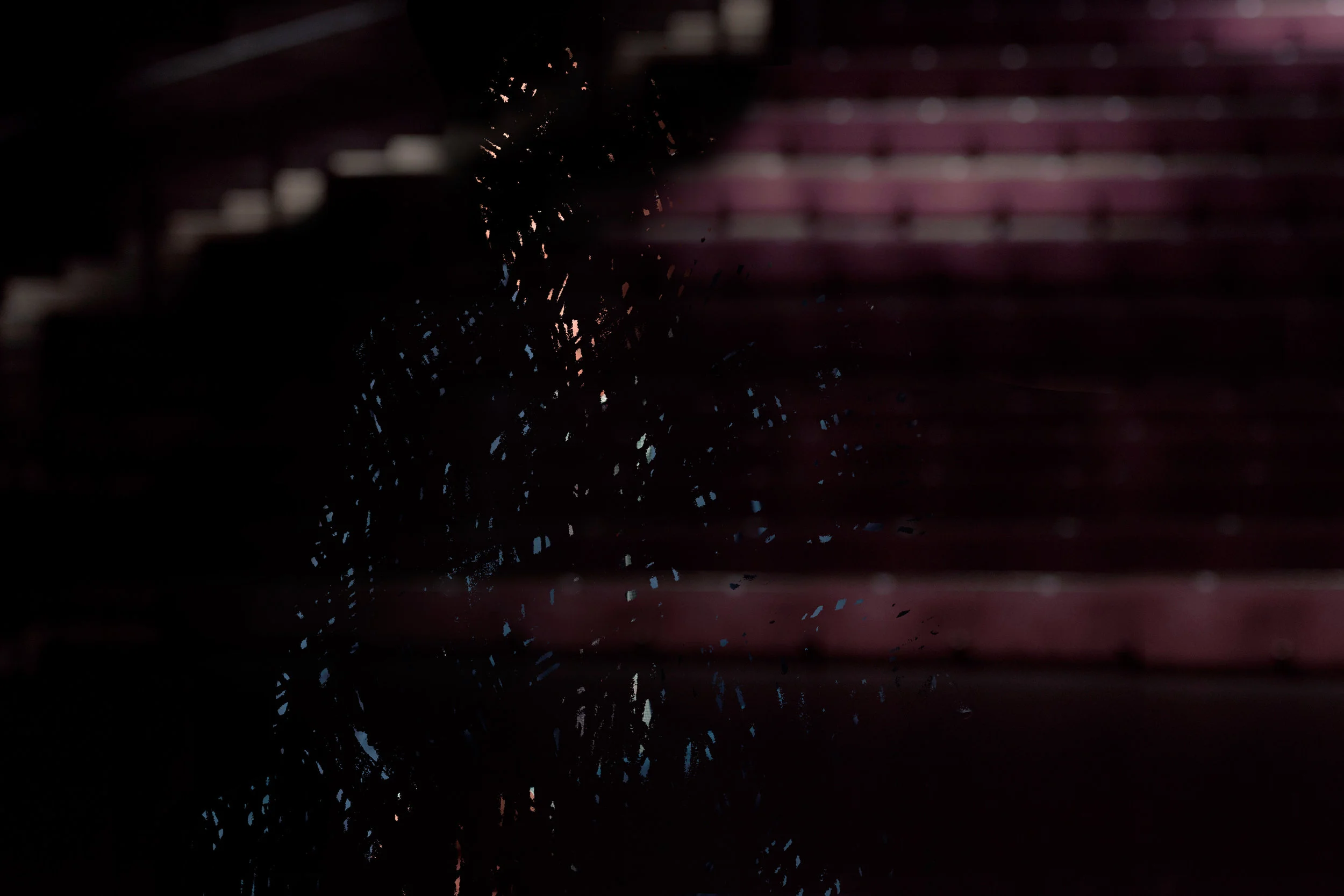


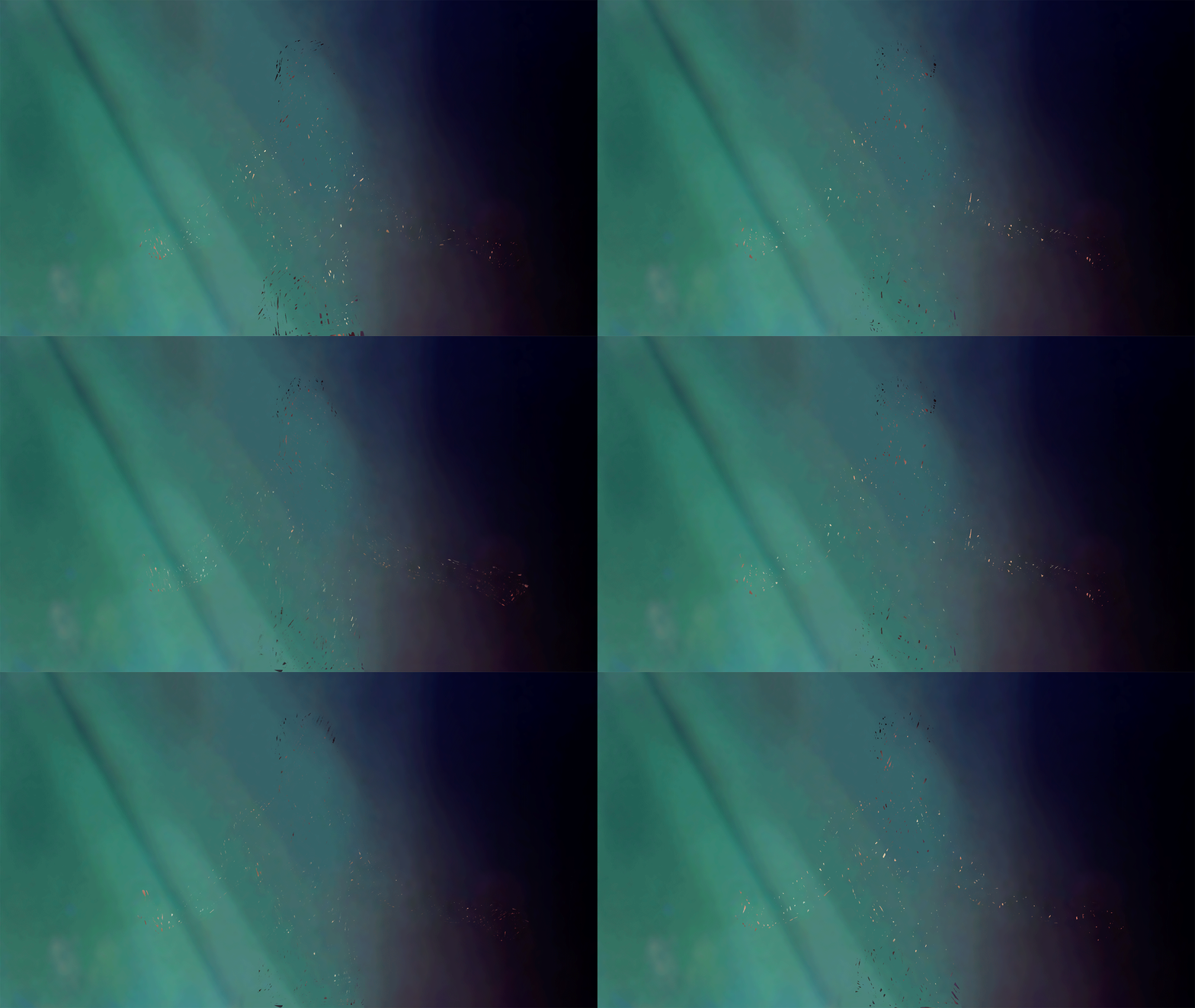


Romans enacted damnatio memoriae, roughly translated as condemnation of memory, as an act of punishment to erase a Roman elite or emperor from the official records. As part of this act statues were destroyed or reworked and names were removed from all public inscriptions.
In this series I try to enact a modern damnatio memoriae, or cancelation, to erase artists and entertainers who have been accused of harassment or assault by repeatedly crossing out each figure using graphite pencils. For each photograph I create a graphite sketch by making marks that obscure each figure. In the computer I transform these physical sketches into masks that filter the digital facades I build to erase each celebrity. The resulting images are empty and yet also haunted by bright shards of color that hang in the air. The flickering remnants mark the complexity of the task of completely canceling a celebrity within a culture obsessed with seeing and archiving famous bodies.
All of the images have been created under the Fair Use doctrine of the US copyright law and follow The Code of Best Practices in Fair Use for the Visual Arts created by the College Art Association.